Cybernetics
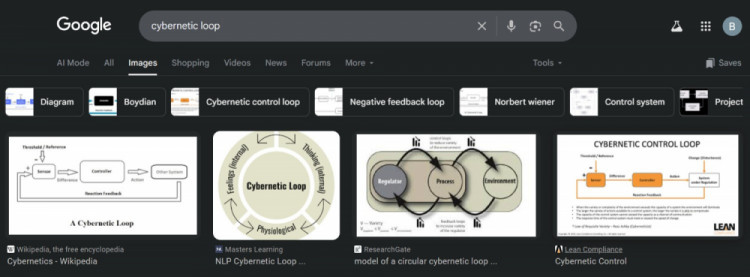

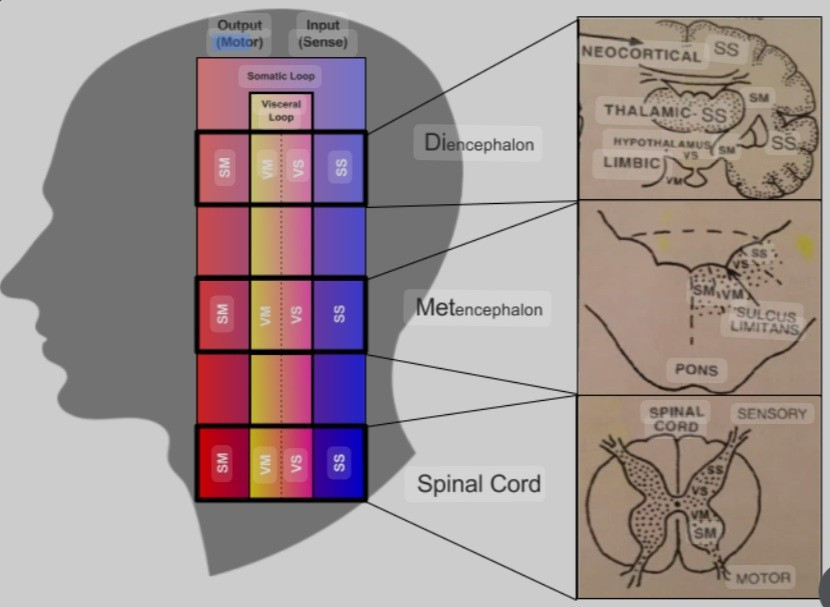
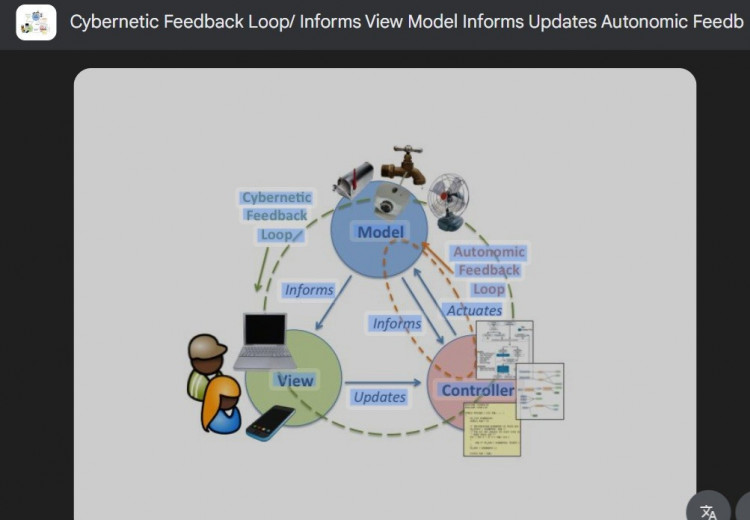
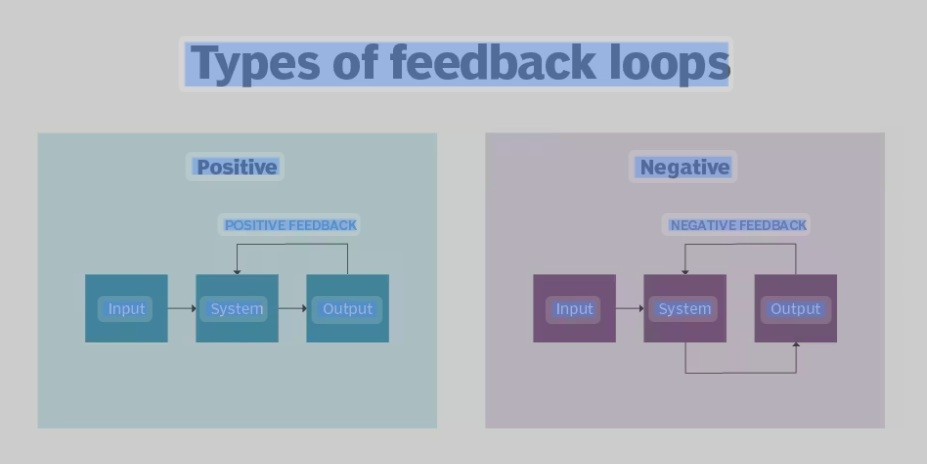
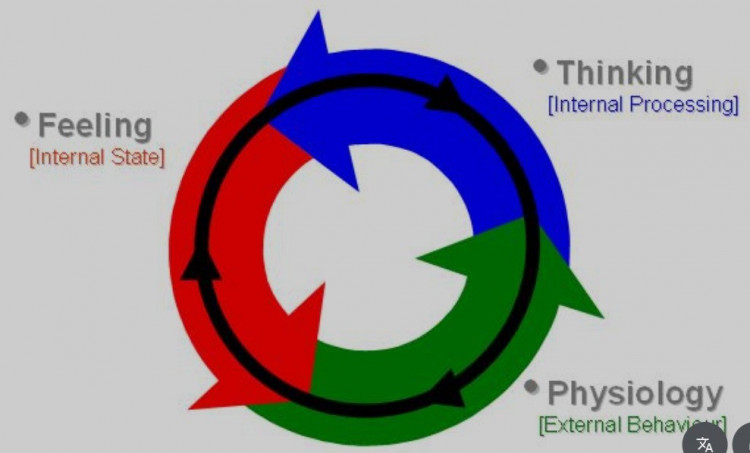
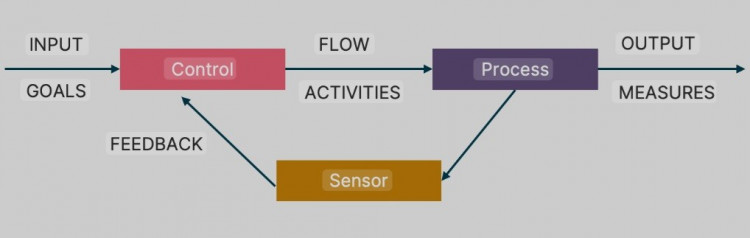
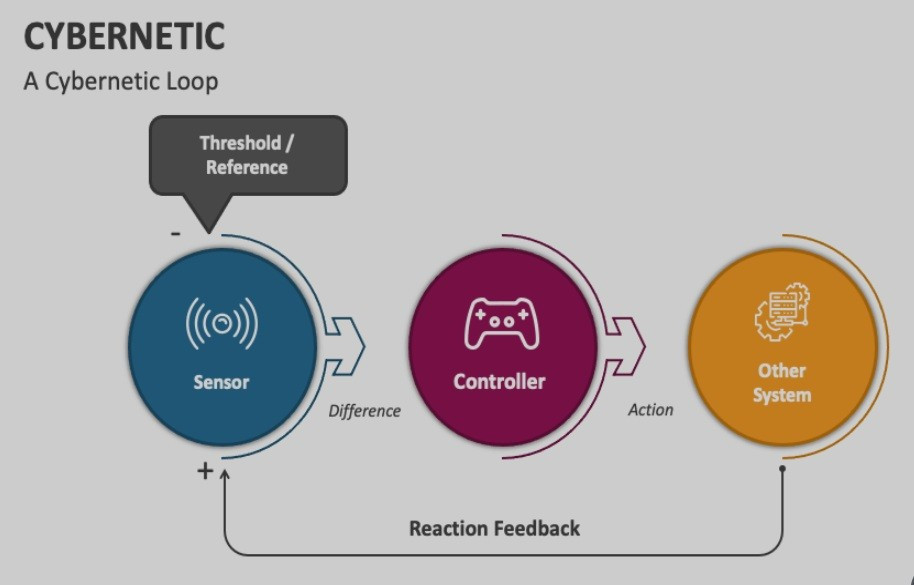
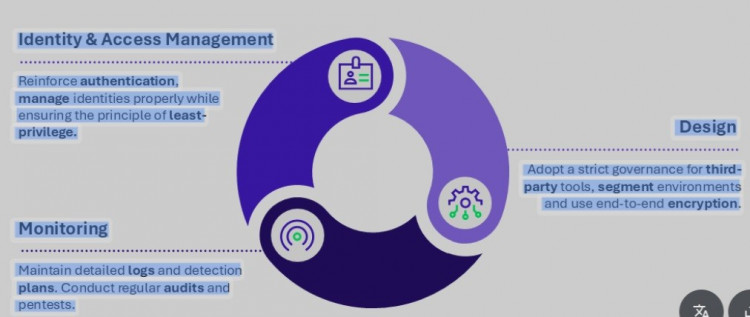
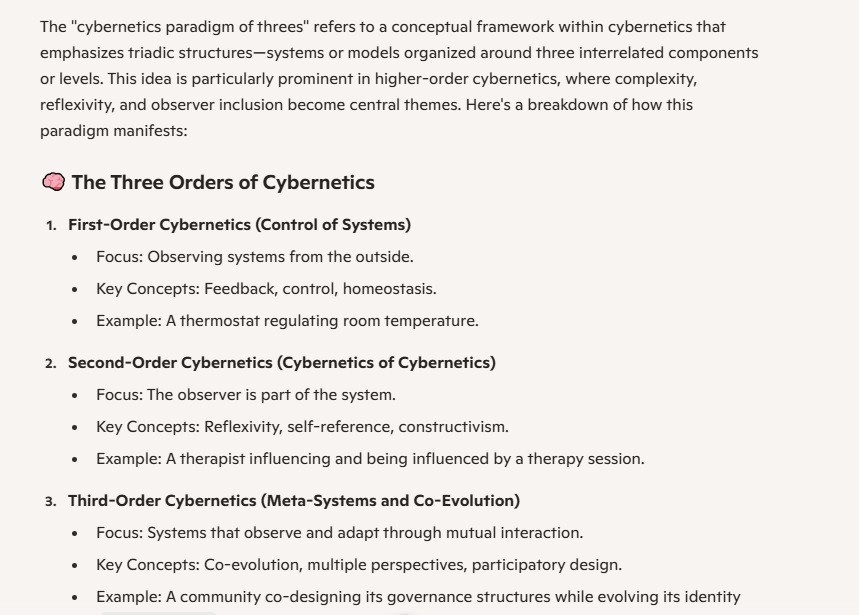
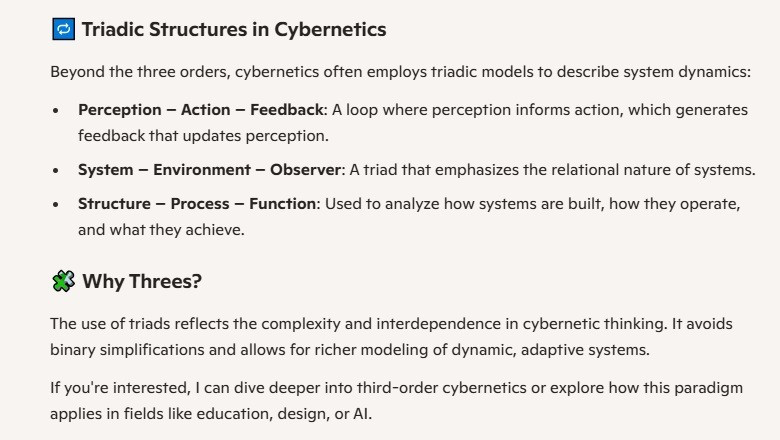
These diagrams illustrate several cybernetic loops. The cybernetic loop is a core concept in the field of cybernetics. Cybernetics is the transdisciplinary study of circular causality involving the processes and feedback loops in systems, whether they are biological, mechanical, or transcendental. The processes shown in these loops are almost all based on a paradigm of threes. Moreover, these images align with the principles and demonstrate a connection to the cybernetic paradigm of threes research involving IBM, specifically the Model, View, Controller. These images depict cybernetic systems that can be described as a recursive feedback loop. The system works in a continuous cycle in much the same manner as the Coupling Facility in IBM's Triplex cluster. The loops check for relevant intelligence based on the data it has gathered. Then there is a targeted output or action. This process is recursive because the output influences the actions, which are then observed again by a sensor, creating a continuous loop of observation, analysis, and support. This aligns with the concept of cybernetics, which is the study of systems that regulate themselves through feedback loops.
Some of these diagrams and cybernetic loops, which are described as "cybernetics ternary" were created by an AI company known as Olive. Olive shut down in late 2023 based on a lack of funding. However, this pioneering work in AI was apparently based on paradigm of threes theory. Specifically, this loop involves a continuous feedback system with three main components: a human worker, a sensor, and a whisper or intelligence delivery mechanism.
Human Worker: The individual performing a task.
Sensor: An AI component named "Olive Helps" that observes the work being done by the human.
Whisper: The "Olive Helps" AI delivers relevant information or "intelligence" to the human worker to assist them with their task, creating a closed-loop system.
Footnote on Olive: Perhaps it was a company too advanced for the AI marketplace. However, their pioneering work serves to help focus the AI industry, as it provides more detail and understanding of how these cybernetic loops function.
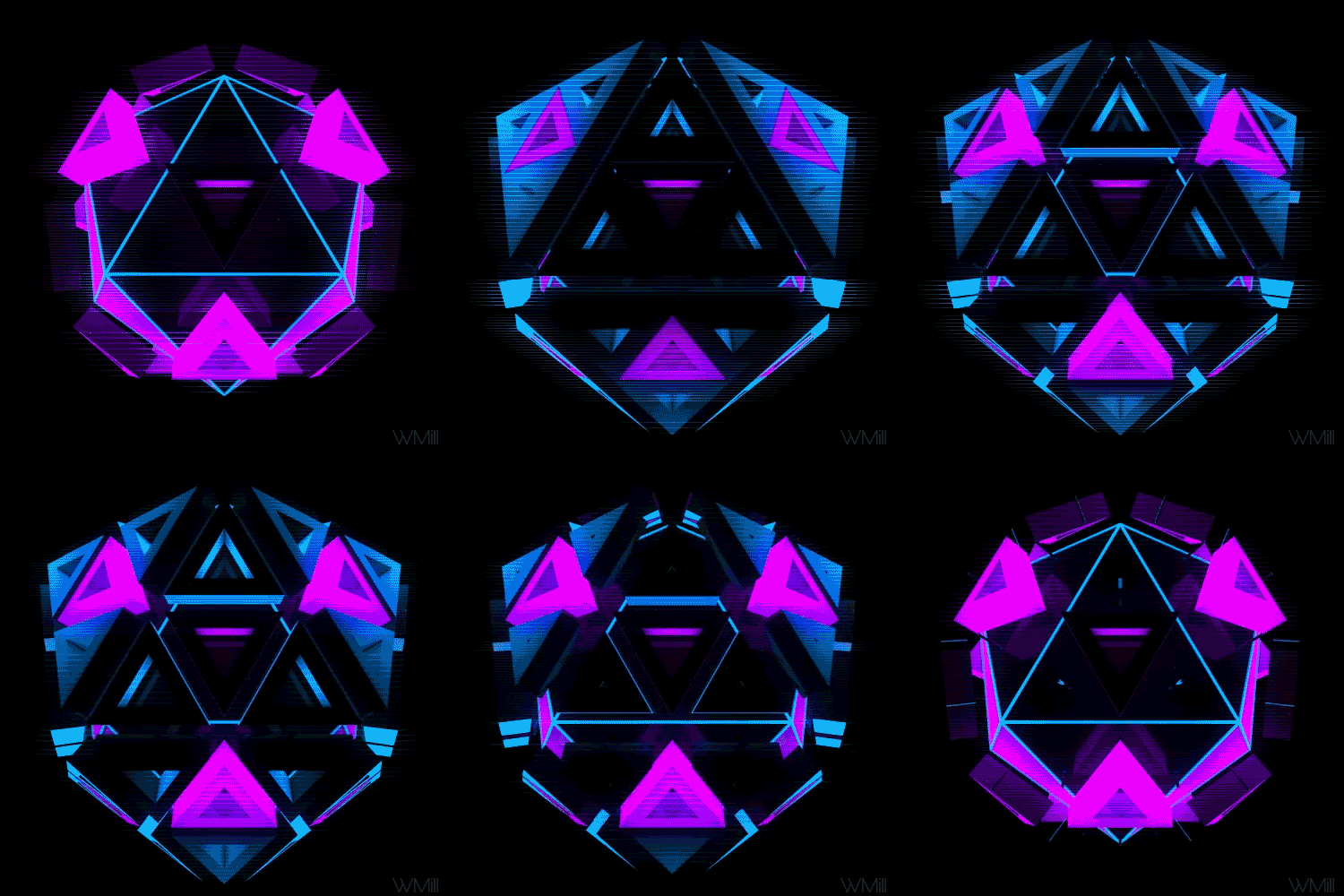
The above pulsating images are very similar to what will become known in the future as Atomic Thinking Units. They represent the conduits for sending, receiving and processing the information that is involved with electrotelepathy.
All current cybernetic "theories" are extrapolations of Norbert Wiener's theory of cybernetics which focus on control and communication in both living organisms and machines, establishing it as a field of study centered on the concept of feedback loops. In his 1948 book Cybernetics: Or Control and Communication in the Animal and the Machine, he proposed that systems are regulated by sending information about their performance back to themselves, allowing for self-correction and goal-oriented behavior. His work influenced fields like artificial intelligence, robotics, and information theory, and he also discussed the philosophical implications of these technologies.
Comparing the Cybernetics in a Paradigm of Threes theory to other existing theories, methods and metrics you will likely discover that they are theoretically unsound and intuitively unpersuasive. They do provide extensive verbiage but fail to offer empirical or demonstrable evidence of their validity. Moreover, some individuals will misuse the terminology of cybernetics or AI to draw attention to an idea, when, in reality, there is nothing of any significance in their points of view. Finally, Wiener's work, while fundamentally sound and likewise for the work of Alan Turing are both dated because of the limitations of the technological eras that confined them and the ability to make their concepts a reality. The field of cybernetics has not significantly advanced since 1948, and ternary computing was most successful from 1958 through the early 1960's. The ability to look back and then apply a futuristic theory allows one to take the bits and pieces of brilliance in the past that were too advanced for the time and then use them to construct a model, such that it is possible to invent and derive the future of technology. The Paradigm of Threes theory of Cybernetics fills in the gaps and missing pieces to greatly expand and redefine the field of cybernetics. It applies an understanding that the human brain operates as a balanced ternary computer, provides a design for a mainframe/supercomputer triplex brain, a triaxle balanced ternary chip, and a new language called Algorithm Language Three. It also incorporates heuristics as well as inference engines with concepts which are beyond the work of either Alan Turing or Norbert Wiener. Moreover, you may read other theories regarding the future of AI. However, it is highly unlikely that any will stand the test of time, as one and only one vision of future technology will prove to be valid. As it stands now, Cybernetics in a Paradigm of Threes is the most complete and advanced theory of AI and cybernetics in the world. It has stood the test of time, and as of January 14, 2026 it is 33 years old. You may read some of the more interesting thoughts related to it below. William T. Voris has no connection to these thoughts and ideas, but they appear as shadowing effects and/or implicit confirmations of his theory.
Footnote on Olive: Perhaps it was a company too advanced for the AI marketplace. However, their pioneering work serves to help focus the AI industry, as it provides more detail and understanding of how these cybernetic loops function.
The above pulsating images are very similar to what will become known in the future as Atomic Thinking Units. They represent the conduits for sending, receiving and processing the information that is involved with electrotelepathy.
All current cybernetic "theories" are extrapolations of Norbert Wiener's theory of cybernetics which focus on control and communication in both living organisms and machines, establishing it as a field of study centered on the concept of feedback loops. In his 1948 book Cybernetics: Or Control and Communication in the Animal and the Machine, he proposed that systems are regulated by sending information about their performance back to themselves, allowing for self-correction and goal-oriented behavior. His work influenced fields like artificial intelligence, robotics, and information theory, and he also discussed the philosophical implications of these technologies.
Comparing the Cybernetics in a Paradigm of Threes theory to other existing theories, methods and metrics you will likely discover that they are theoretically unsound and intuitively unpersuasive. They do provide extensive verbiage but fail to offer empirical or demonstrable evidence of their validity. Moreover, some individuals will misuse the terminology of cybernetics or AI to draw attention to an idea, when, in reality, there is nothing of any significance in their points of view. Finally, Wiener's work, while fundamentally sound and likewise for the work of Alan Turing are both dated because of the limitations of the technological eras that confined them and the ability to make their concepts a reality. The field of cybernetics has not significantly advanced since 1948, and ternary computing was most successful from 1958 through the early 1960's. The ability to look back and then apply a futuristic theory allows one to take the bits and pieces of brilliance in the past that were too advanced for the time and then use them to construct a model, such that it is possible to invent and derive the future of technology. The Paradigm of Threes theory of Cybernetics fills in the gaps and missing pieces to greatly expand and redefine the field of cybernetics. It applies an understanding that the human brain operates as a balanced ternary computer, provides a design for a mainframe/supercomputer triplex brain, a triaxle balanced ternary chip, and a new language called Algorithm Language Three. It also incorporates heuristics as well as inference engines with concepts which are beyond the work of either Alan Turing or Norbert Wiener. Moreover, you may read other theories regarding the future of AI. However, it is highly unlikely that any will stand the test of time, as one and only one vision of future technology will prove to be valid. As it stands now, Cybernetics in a Paradigm of Threes is the most complete and advanced theory of AI and cybernetics in the world. It has stood the test of time, and as of January 14, 2026 it is 33 years old. You may read some of the more interesting thoughts related to it below. William T. Voris has no connection to these thoughts and ideas, but they appear as shadowing effects and/or implicit confirmations of his theory.
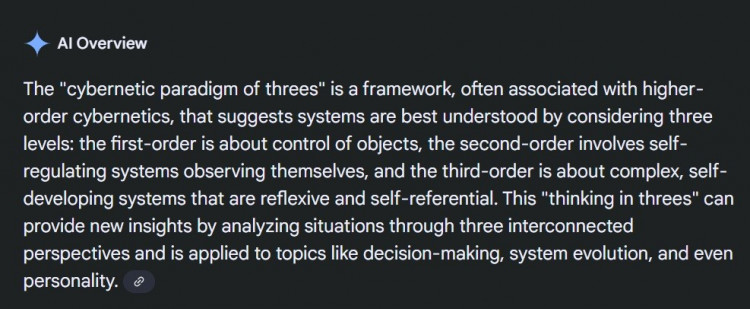
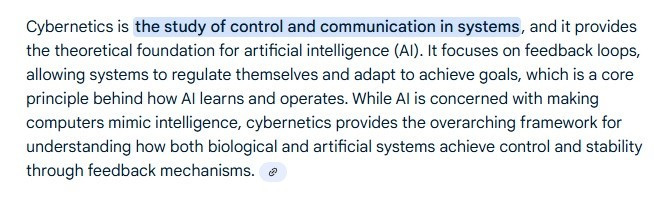
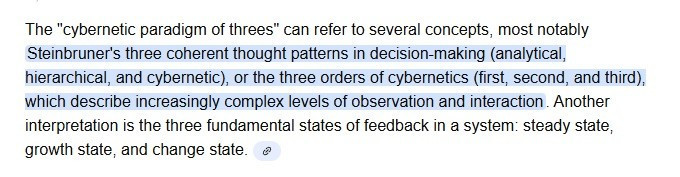
.
.